
DRC and IFC Join Forces to Build a Stock Exchange in Kinshasa
The Democratic Republic of Congo is moving to fast-track the build-out of its capital market, and it has enlisted the International Finance Corporation (IFC) to help get there.
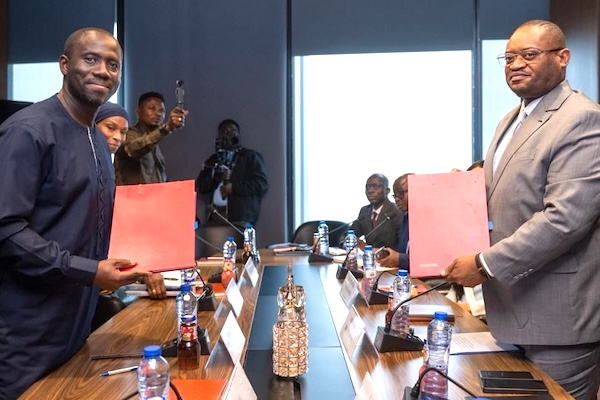
On June 18, 2026, the country's Ministry of Finance and the World Bank Group arm put their names to a partnership agreement in Kinshasa, one designed to underpin the creation of the country's first stock exchange. Signing on behalf of the two sides were Finance Minister Doudou Fwamba and IFC Country Director Malick Fall.
For a nation of more than 110 million people and one of Sub-Saharan Africa's larger economies, the absence of a domestic securities exchange has long stood out. The DRC's projected output of around $123 billion this year makes it the region's fifth-biggest economy, yet companies looking to raise equity at home have had nowhere to list, and ordinary Congolese have had no formal way to buy into the firms shaping their economy. The Kinshasa project is an attempt to close that gap.
Why a bourse, and why now
The timing is no accident. The DRC's economy remains overwhelmingly tied to what comes out of the ground, with copper, cobalt, gold, coltan, diamonds and other minerals making up the bulk of its export earnings. That concentration leaves public finances and growth heavily exposed to swings in global commodity prices, and policymakers have made diversification a recurring theme.
The country has also been edging steadily toward deeper financial markets. Earlier in 2026, Kinshasa made its debut on international capital markets, raising 1.25 billion dollars from its first sovereign eurobond in a deal that drew more demand than expected. A domestic exchange would extend that momentum inward, giving local companies and savers a market of their own rather than leaving capital-raising to foreign bondholders and a handful of banks.
According to a statement from the Ministry of Finance, the partnership with the IFC carries a broad remit. The two parties will work together on shaping the regulatory rulebook, standing up the market's underlying infrastructure, training the people who will run and use it, sharing technical know-how, widening the pool of investors, and steering the exchange's very first trades.
Turning citizens into shareholders
For Fall, the project is about far more than the mechanics of setting up a trading venue.
"Strong capital markets mean access to long-term financing for companies, the opportunity for Congolese citizens to become shareholders in their own economy, and a powerful tool for diversifying sources of growth well beyond natural resources," he said.
Fwamba, for his part, pointed to the importance of building in incentives that would draw companies toward the new market once it opens. He suggested that, in time, the authorities might oblige some of the country's larger firms to raise money or float shares through the future Kinshasa exchange, a nudge intended to seed the market with credible listings rather than wait for them to arrive voluntarily.
The government is chasing two goals at once: bringing greater transparency to capital market dealings and redirecting more of the nation's savings into productive investment. The reform, the minister added, should also open the door for ordinary Congolese to take stakes in firms operating in strategic fields such as mining, telecoms and infrastructure, sectors where ownership has historically sat with the state or with foreign investors.
The draft law
The agreement lands while the DRC works its way through the legislative steps needed to bring a national exchange into being. On June 11, Fwamba appeared before senators to present and defend the bill that would govern the country's financial markets and formally establish the Kinshasa Stock Exchange. The text has already cleared the National Assembly and is now under review in the Senate.
As drafted, the law sets out how the national exchange would be organised, how instruments such as shares, bonds and financial contracts would be regulated, and how a Capital Markets Authority would be created to oversee it all.
That authority would carry responsibility for keeping operations on the future market transparent, credible and secure. Getting it right will be pivotal to winning and holding the trust of investors, issuers and the wider public, particularly in a country where a difficult business climate and a slow court system have long weighed on investor confidence.
The groundwork stretches back to April 2025, when the government, backed by the African Development Fund, called on firms to express interest in carrying out a feasibility study and business plan for a securities exchange in the DRC. The IFC partnership builds on that early scoping work, moving the project from concept toward execution.
What it will take to succeed
The tie-up with the IFC is another rung on the ladder toward a functioning capital market, but the harder part lies ahead. Frontier exchanges across Africa have learned that launching is the easy bit; the real test is liquidity, listings and sustained participation.
Whether Kinshasa's bourse ultimately delivers will hinge on several things coming together at once: how robust the regulatory framework proves to be, how credible the supervisory authority is seen to be, whether the country's major companies actually choose to list, and whether the market can attract a deep enough base of local and institutional investors to keep trading active once the opening fanfare fades.
Get those pieces right, and the DRC could finally give its companies a homegrown route to capital and its citizens a stake in the economy's next chapter. Get them wrong, and the exchange risks joining the list of African markets that opened with ambition but struggled to build depth.

